












Strategic Vision 

Decision-making and risk mitigation 

Cross-team Alignment 

Resource efficiency 

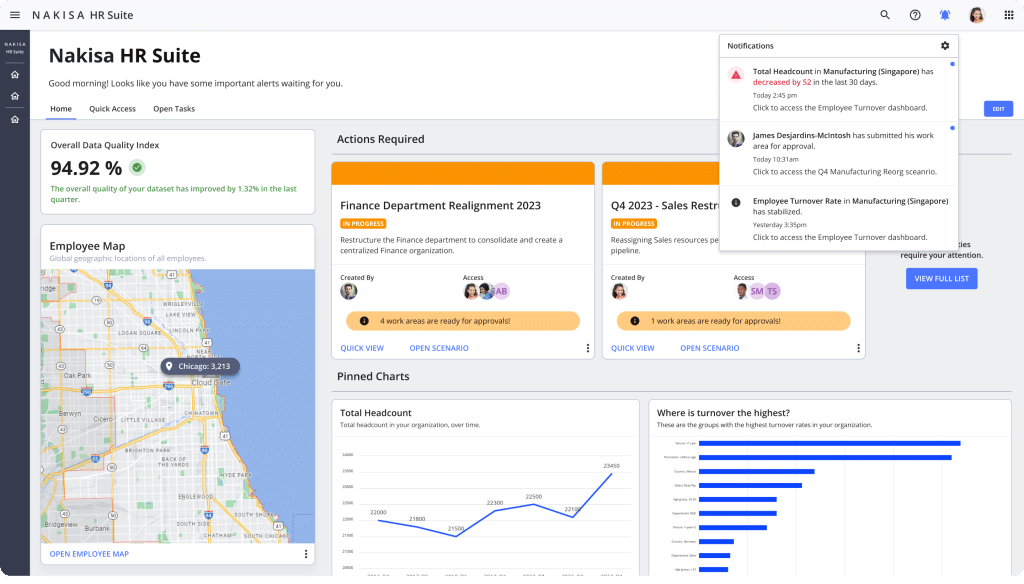
Designed for large organizations with complex structures and dynamic workforce needs, Nakisa empowers you to make data-driven decisions that align talent with future business needs. With  and the support of advanced analytics and scenario modeling, you can forecast upcoming needs based on your current state and future drivers, identify workforce gaps, and optimize talent strategies to stay ahead of changing market conditions.

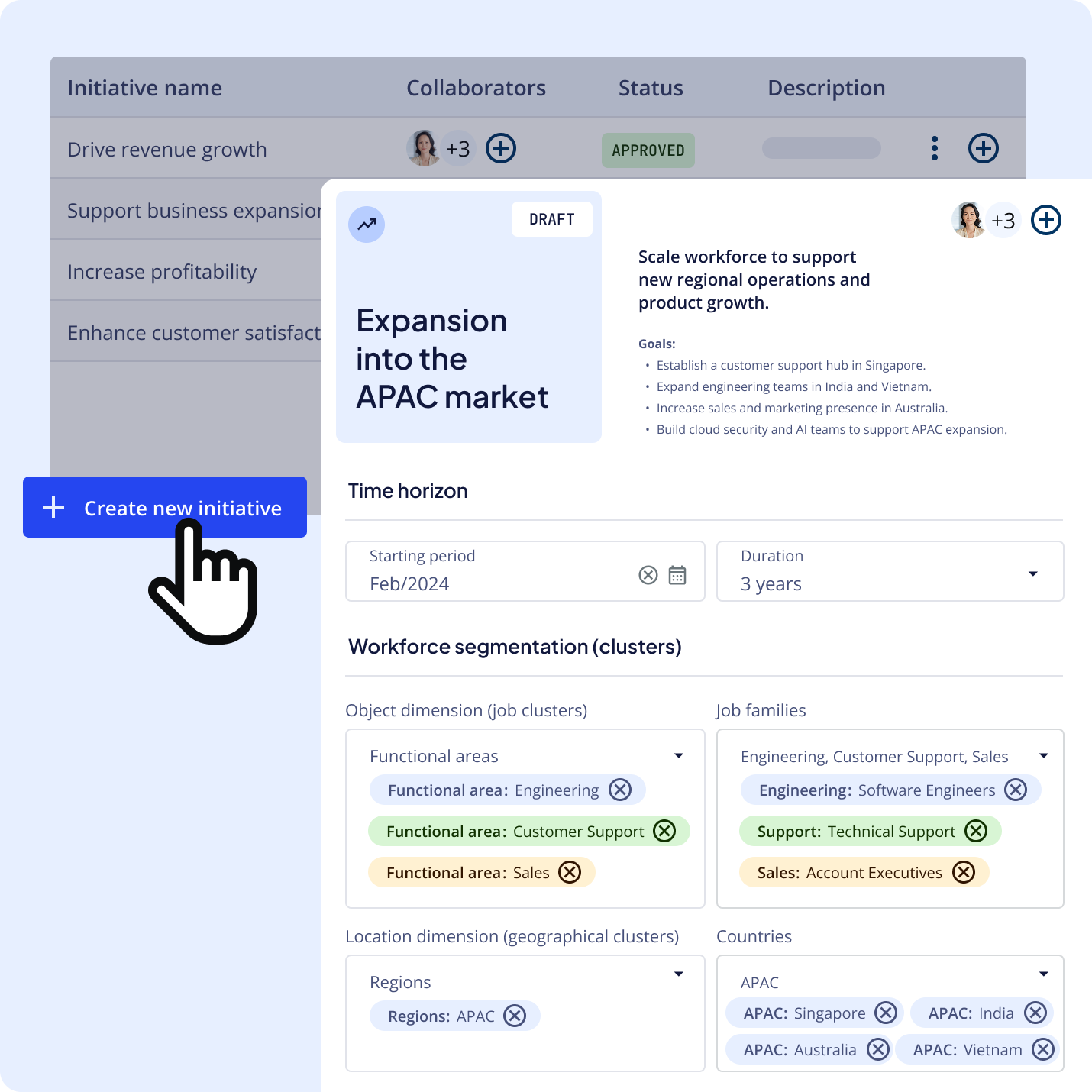

Strategic initiative creation, timeline, and cluster selection
Define the strategy and create initiatives with key attributes such as name, description, goals, and stakeholders. Then, determine two key elements: - Time horizon: Determine the planning scope, such as long-term plan (3-5 years), medium-term (2-3 years), or short-term. - Dimensions/Clusters: Categorize data by legal entity, business unit, function, job family, or location for deeper analysis and insights.
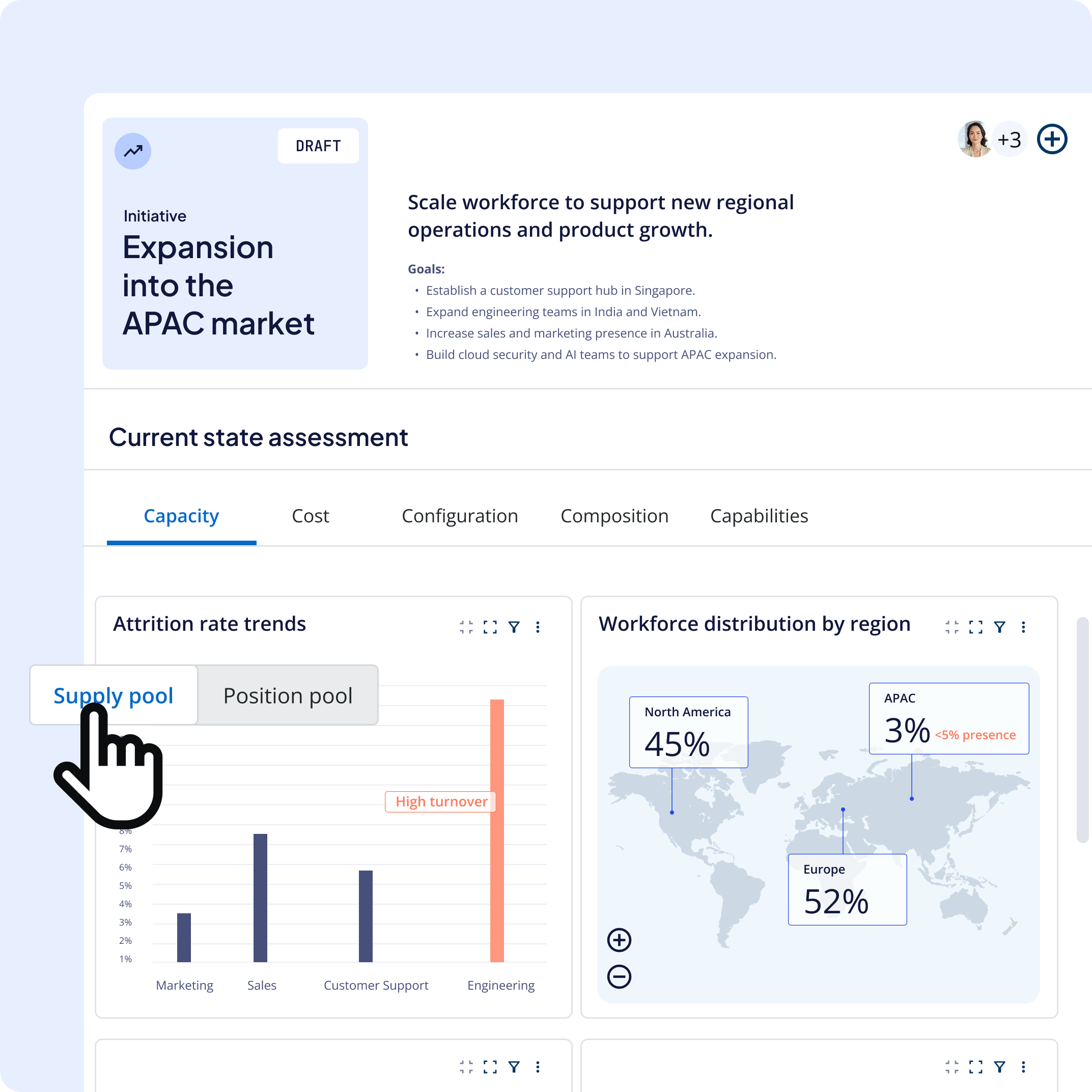

Current state assessment
Analyze both talent (“supply pool”) and positions (“position pool”) using dashboards, trends, and key metrics, through a 5C framework: - Capacity: Headcount, FTE, and position trends - Cost: Salaries, compensation, and position budgets (including vacancies) - Capabilities: Skills and competencies at both employee and position levels - Composition: Workforce structure and diversity (including roles, functions, seniority, demographics, and employment types) - Configuration: Organizational structure (including spans and layers)
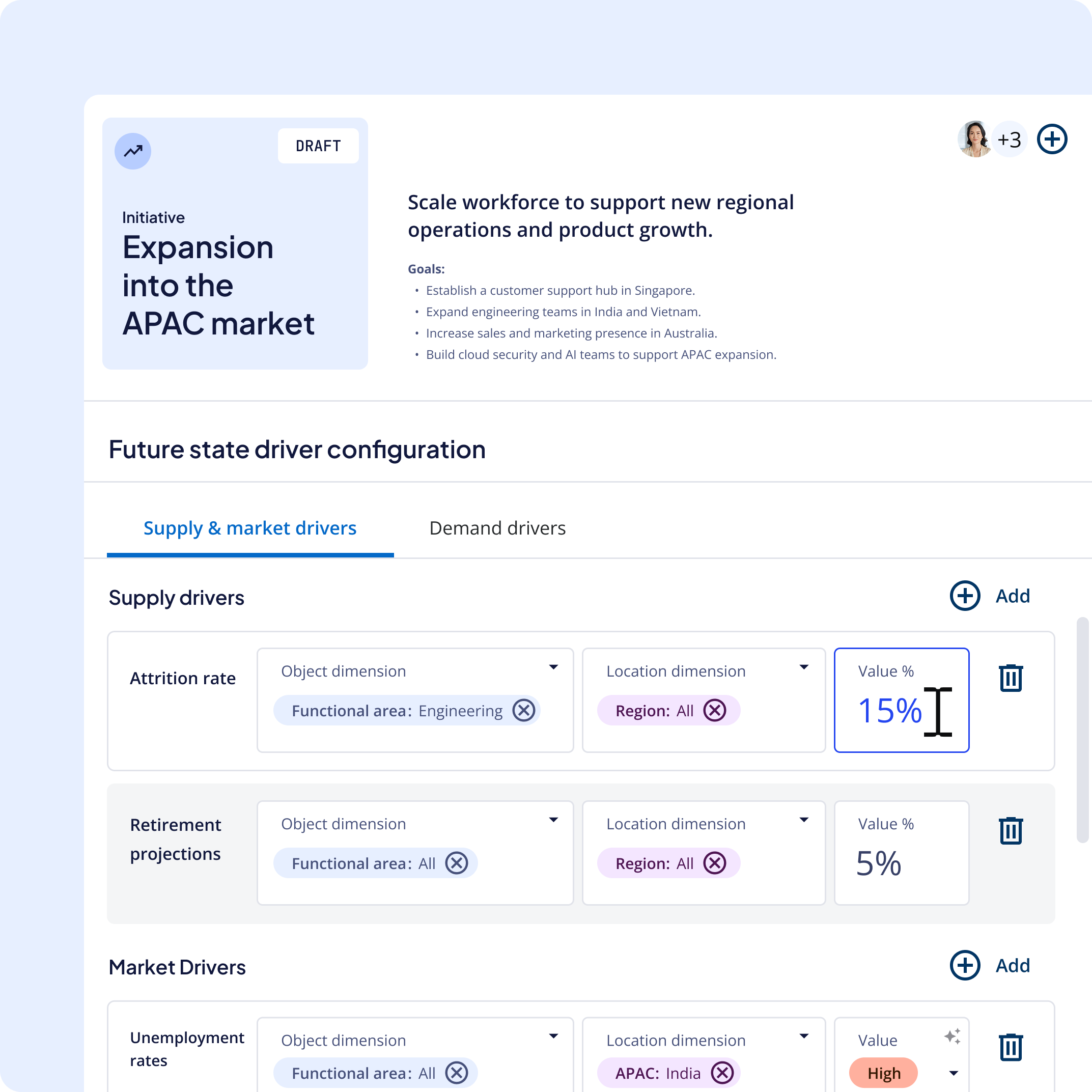

Future state driver configuration
Define key drivers shaping the strategic initiative across three critical categories: - Supply drivers: Attrition rates and retirements - Market drivers: External factors like unemployment rates or inflation - Demand drivers: Internal factors such as revenue growth targets, geographical expansion, and operational efficiency goals (e.g., organization optimization)
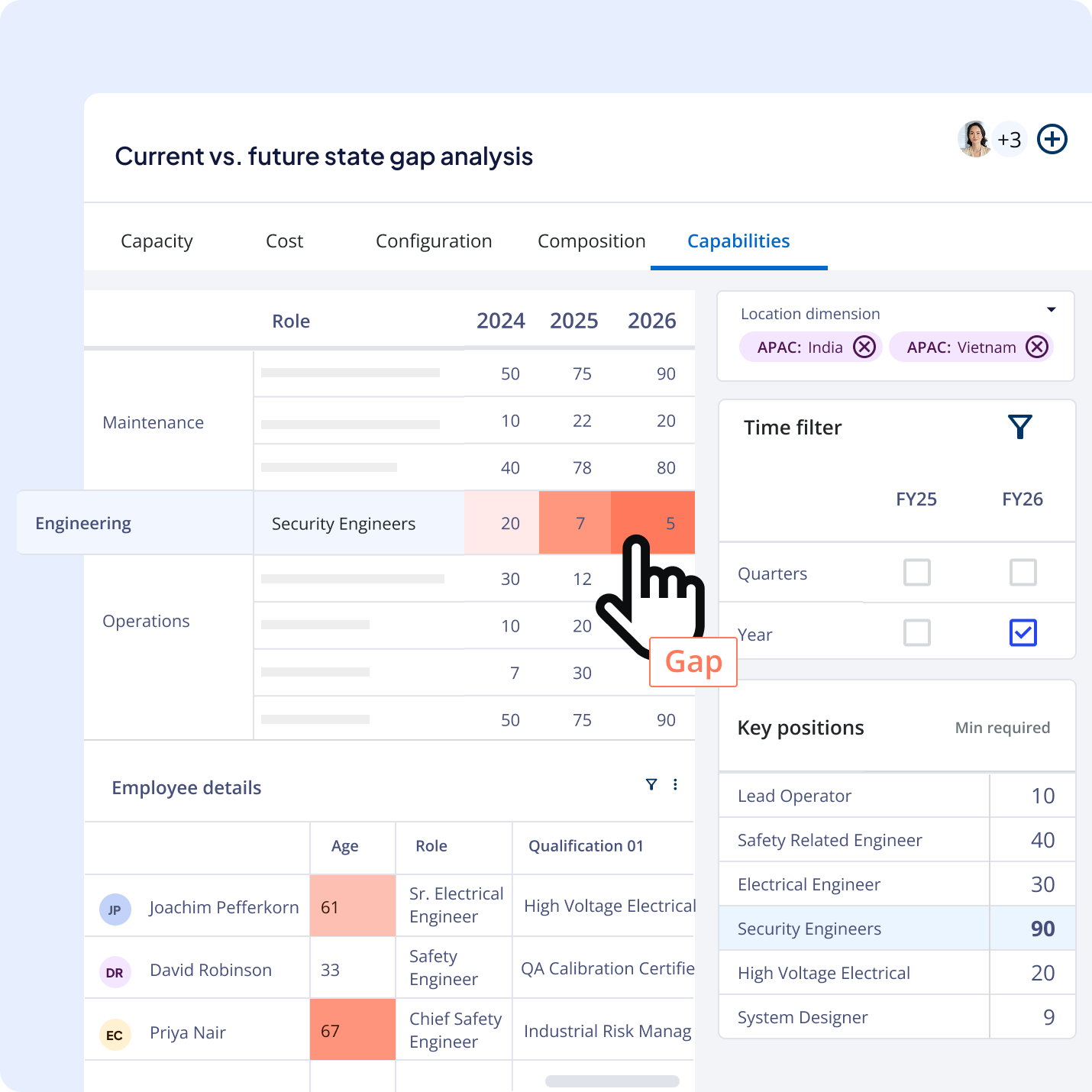

Gap analysis of current vs. future state
With the strategic initiative, current state, and future state drivers defined, you can now conduct a gap analysis. This step compares the current state to the future state using the 5C framework and dimensions to identify gaps in: - Capacity: Headcount, FTE, and position trends - Cost: Salaries, compensation, and position budgets (including vacancies) - Capabilities: Skills and competencies at both employee and position levels - Composition: Role and skill distribution - Configuration: Organizational structure (including spans and layers)
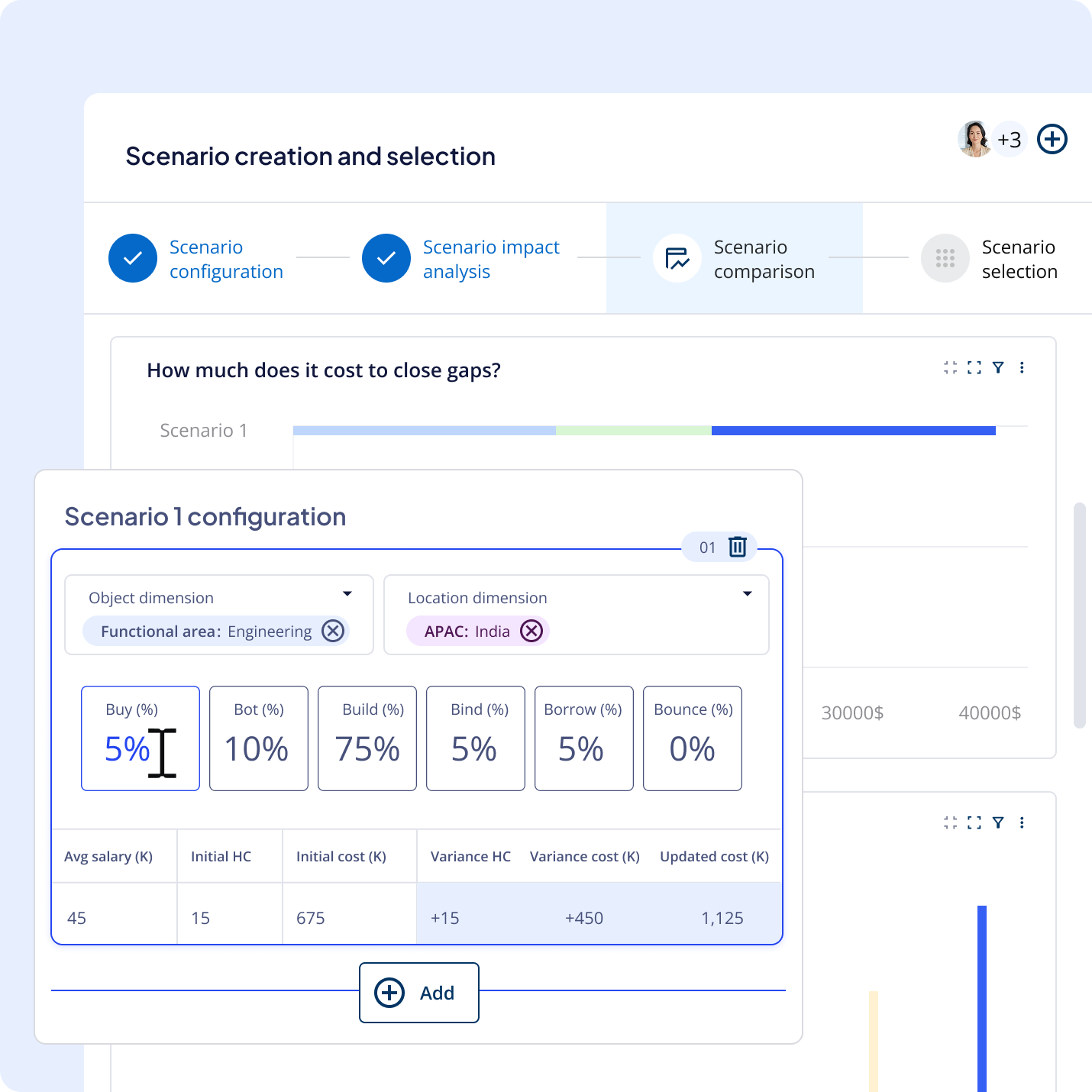

Scenario creation, comparison, and selection
Following the gap analysis, explore different scenarios to close the supply/demand gap using the 6B model for managing and optimizing a workforce. Analyze and select the most appropriate combination of "B" strategies to meet your business objectives effectively: - Buy: Recruit new talent - Borrow: Hire contractors - Bot: Automate certain roles - Build: Upskill or train existing employees - Bounce: Reduce or transition certain roles - Bind: Retain key talent
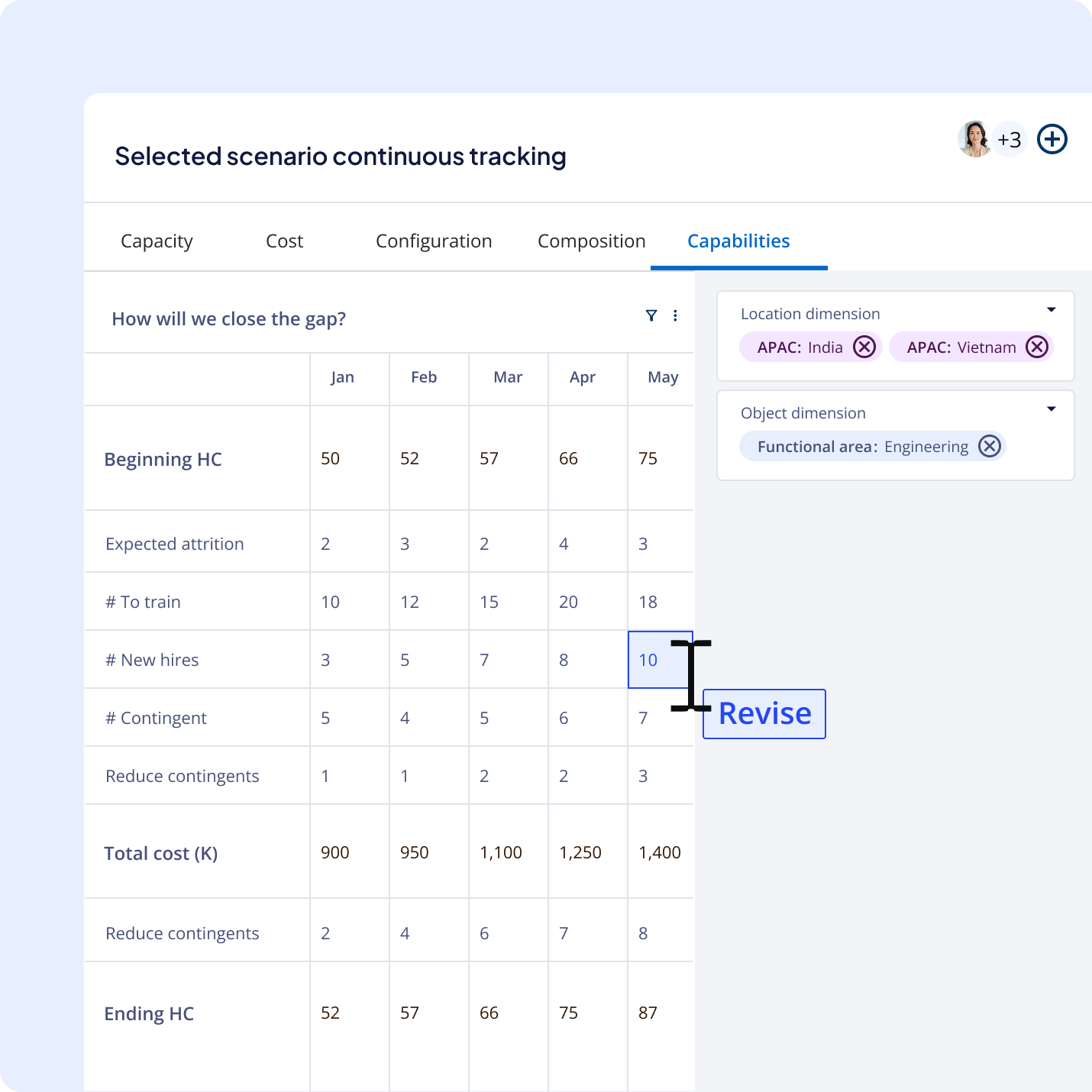

Selected scenario continued tracking
Monitor progress towards achieving the chosen scenario, with evaluations done monthly or quarterly. If necessary, recalibrate to ensure alignment with business goals. At this stage, based on your internal processes, you can begin operational or strategic organizational design and operational workforce planning.
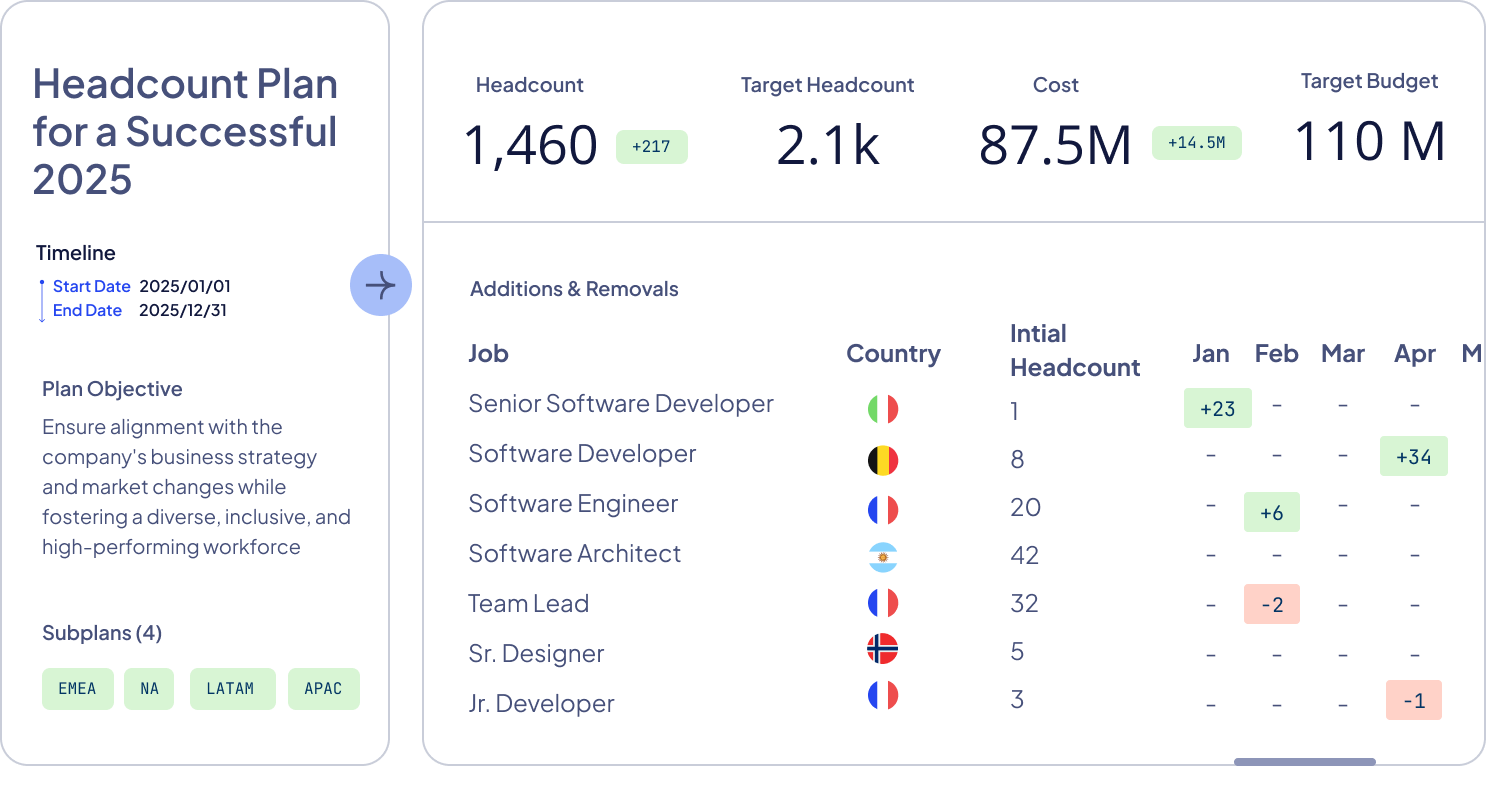


Native bidirectional ERP integrations
Nakisa's software natively integrates bidirectionally with SAP HCM, SAP SuccessFactors, Workday, Oracle, and other ERP and HCM systems to ensure that your HR data is always complete and up to date. Experience smooth data synchronization and focus on interpreting data rather than managing it.
Nakisa’s software natively integrates bidirectionally with SAP HCM, SAP SuccessFactors, Workday, Oracle, and other ERP and HCM systems to ensure that your HR data is always complete and up to date. Experience smooth data synchronization and focus on interpreting data rather than managing it.


All in all, the process could take up to 38 days to complete the org change. With the write-back, the end-to-end org change process now takes under 5 days… It is a huge win for our HR group.

Claudia Leavens
Manager, Org Design & Job Evaluation at OPG

Huge time savings were achieved through filtering, slicing, and dicing of data based on different dimensions such as layers, business lines, regions, countries, functions, and products. Reports that took 2−6 hours to create in the past, were now being instantly generated in Nakisa Workforce Planning.”

Michelle Seymor
Head People & Culture Transactional Solutions at Standard Bank Group
Even as we go through a rapid growth period, Nakisa was able to fully integrate to our ERP system in real-time and handle our ongoing transformation needs in it’s stride. An unexpected benefit as we started using [the system] was the ability to identify data quality issues in our ERP, something we had no visibility of previously

Arief Setiawan
Deputy VP HR Operations at Sinarmas